
What a field level hazard assessment is actually for
Last updated: Written by Blake Cowan, NCSO
The short answer
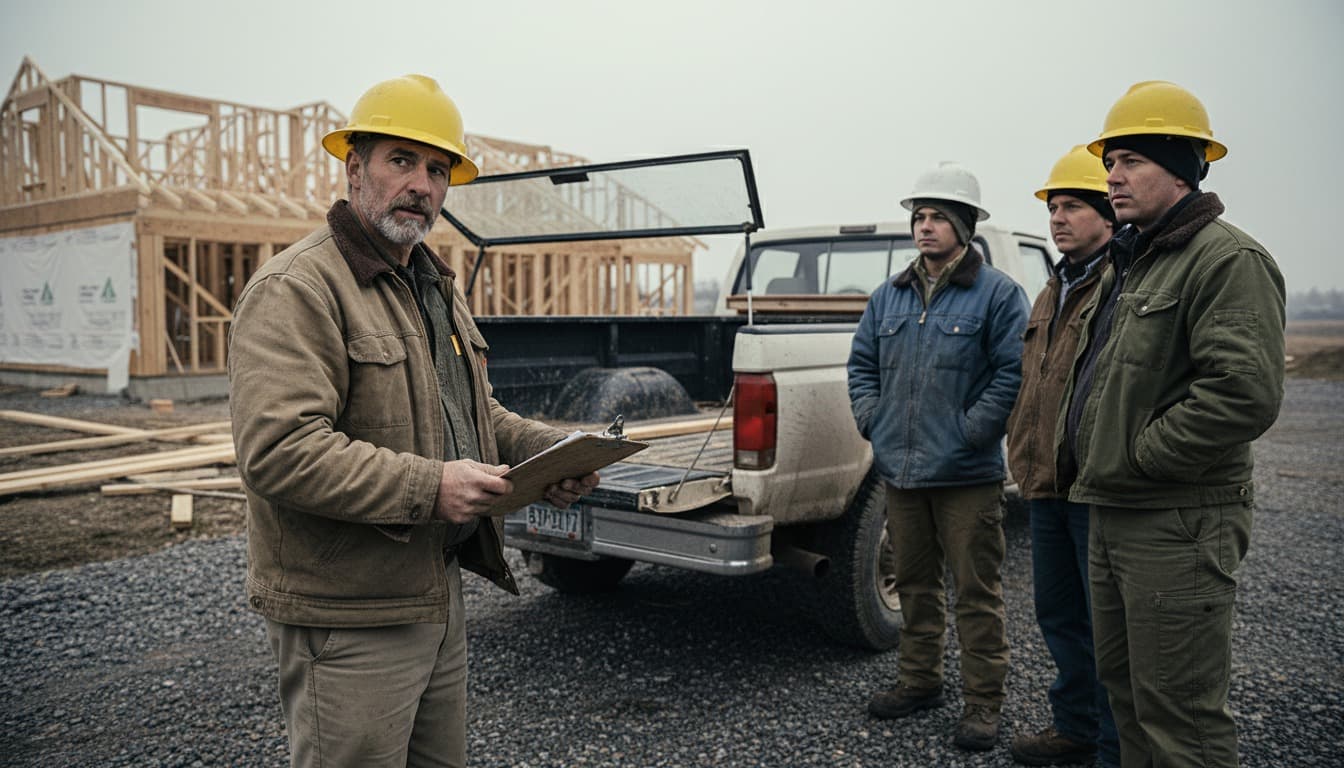
A field level hazard assessment (FLHA) is the check a crew does at the site, before work starts, for that day and those conditions. Its real value is not the paperwork. It is the few minutes where the supervisor gets the whole crew on the same page about who is doing what, and teaches them to see the hazards for themselves.
I am a big fan of the field level hazard assessment, and not for the reason most people think. Yes, you walk the site, you look for the concerns, you make sure nobody messed with the equipment overnight. That part matters. But the real value is what happens in the conversation, and that is the part the form never shows.
What is a field level hazard assessment?
A field level hazard assessment is a short, task specific check a crew completes at the worksite before starting work, and again whenever the conditions change. The aim is the same as any hazard assessment: evaluate the hazards, then remove them or add controls to bring the risk down before anyone starts. The difference is that an FLHA does it for today, on this site, with the people who are actually exposed.
The mechanics are simple and they are covered in full on how to fill out an FLHA properly: name the task, break it into steps, name the hazard for each step, write the control that is actually in place, and have everyone sign their own line. If you want the difference between this and the formal assessment, that is on the hazard assessment overview. This post is about why it is worth doing at all.
What it is actually for
Here is what a good FLHA does that the form does not show:
- It gets the crew on the same page. If you have six people, you do not want six people wandering toward the same task. As the supervisor you want a couple of guys on this, a couple on that, everyone knowing their piece. Set it up organized and you save yourself a world of headaches later in the day.
- It teaches your people to see hazards themselves. This is the one I care about most. If you are a supervisor, your job is to train your crew to look after themselves when you are not standing there. Workers get so used to being told about the hazards that if you step into a meeting for an hour, some of them would not recognize the biggest hazard on the site if it was about to bite them. The daily assessment is how you build that habit, one morning at a time.
- It catches the equipment problem before the shift, not after. The walk-around is where you find the flat tire, the missing guard, the frayed strap, while it is still cheap to fix.
- It creates the record that protects everyone. Done honestly, the card is proof of what the crew knew and controlled before the work started.
Notice that only the last one is about paperwork. The first three are about people, and they are the reason I fill one out even on a day nobody is going to audit me.
The story that shows why: two crews, one table saw
Here is one that stuck with me. On a construction site, the crew did a hazard assessment, and it was not a bad one. Two young rookies were assigned to clean the scraps of wood off the second floor and throw them down into a pile behind the house. Reasonable task, assessed on its own.
What the assessment did not do was connect that task to the other one. There were people working behind the house with a table saw, right where the wood was coming down, and nobody told them to move or told the rookies to hold off. Before long a guy took a block of wood to the head and ended up with six stitches.
That is the hazard an assessment misses most: not the task in front of you, but what the other crew is doing thirty feet away. A single task, assessed by itself, can be perfectly safe and still put somebody in the hospital. It is why a real FLHA asks whether other crews or trades nearby have been identified and spoken to, and why that line is worth more than it looks.
And why you check the gear yourself
The other reason I walk the equipment is that I have found the things you do not want to find at the wrong time.
I once inspected a set of fall arrest equipment before a crew went out on a roof, and one of the leg straps, the strap that holds the worker's leg in the harness, was torn about three quarters of the way across. If that man had taken any kind of fall, half his body would have gone forward and the other half would have been held back by the good strap. He would have been seriously hurt, and he had no idea the strap was going.
You find that on the tailgate, in two minutes, or you find it in the air. The FLHA is where you decide which.
How to actually fill one out
The purpose is the point of this post. The mechanics are on the step by step page, with a worked example and the mistakes an auditor spots first. And the card itself is a free download, no email required.
Field level hazard assessment (FLHA) card
A card the crew ticks off at the tailgate before the work starts: check the hazards, rank them, write the controls, sign on.
Direct download. No email needed, no signup.
Keep it short, do it with the crew, and make sure the things they write down actually go somewhere. A card that gets filled in honestly every morning, by people who are learning to see the site for themselves, is worth more than a perfect one that gets filled in on Fridays.
Questions people ask about this
What is a field level hazard assessment?
What is the point of a field level hazard assessment?
What is the difference between an FLHA and a formal hazard assessment?
Who fills out an FLHA?
If the card gets filled in and the conversation does not happen
We write the formal hazard assessments for the tasks your crews actually run, so the card has real prompts to check against instead of a generic list. The card above is free and yours to change, and rewriting the prompts with the crew who use it costs nothing.