
Pre-trip inspection: what the law requires, and the defects that stop the truck
Last updated: Written by Blake Cowan, NCSO
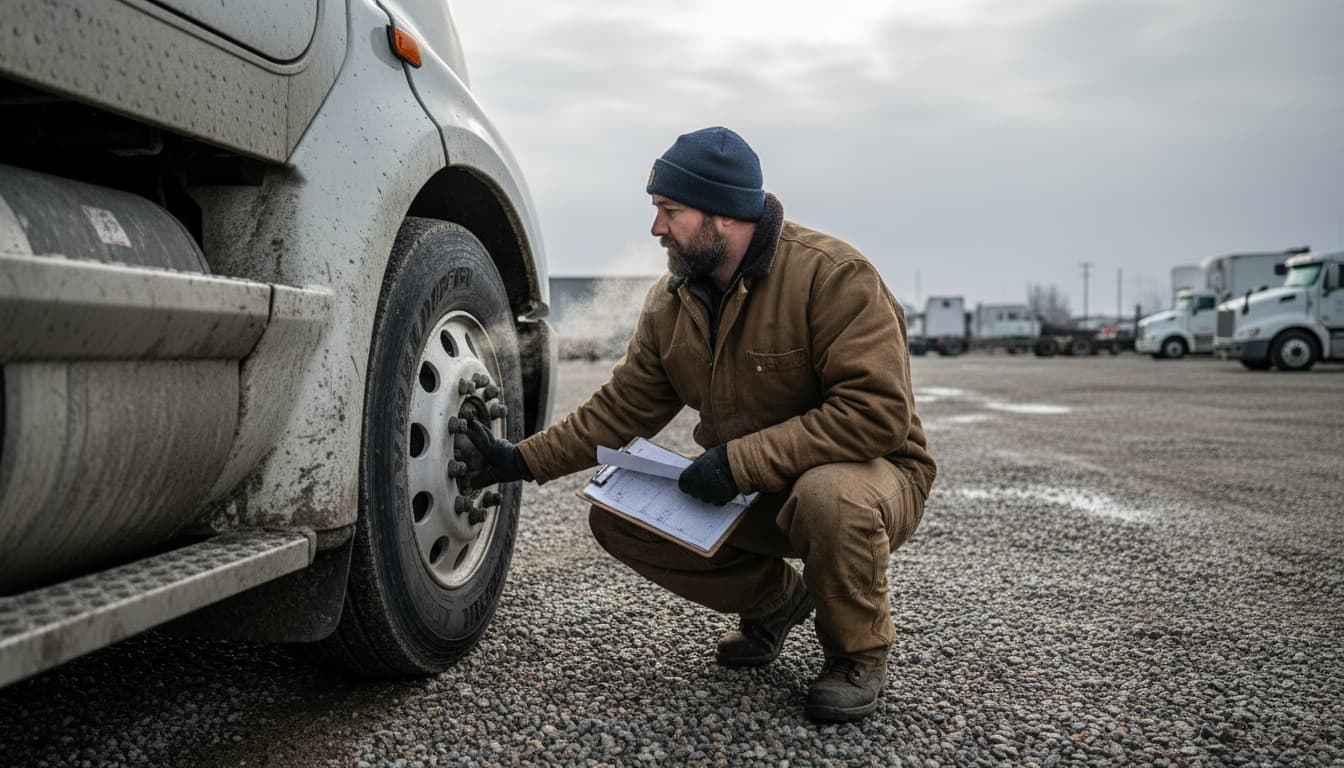
The short answer
A pre-trip inspection is the daily check a driver does to confirm a commercial vehicle is safe before it goes on the road, and in most of Canada it is required under National Safety Code Standard 13. The same standard sets out the 23 systems that have to be checked and the defects serious enough to take the vehicle out of service.
Most drivers treat the pre-trip inspection as paperwork. The law treats it as the line between a fixable problem in the yard and a collision on the highway. This walks through what a pre-trip has to include, the minor and major defect split that trips people up, and what happens when a truck is driven with a major defect.
What is a pre-trip inspection, and is it legally required?
A pre-trip inspection is a documented daily check of a commercial vehicle's safety systems, required under National Safety Code Standard 13, which every province and territory has adopted. Under a typical trip inspection regulation, each commercial vehicle must be inspected at least once every 24 hours, and the driver must carry the most recent inspection report in the vehicle.
It generally applies to trucks, tractors and trailers over 4,500 kg. The exact wording, the vehicles covered, and how long a report stays valid differ by jurisdiction, so confirm the rule for the province you run in. The trip inspection rules province by province sets out where each one differs and how long you have to keep the reports.
What does a pre-trip inspection have to cover?
It has to cover the systems in the applicable inspection schedule, not just whatever the driver happens to glance at. For a truck, tractor or trailer, Schedule 1 of NSC Standard 13 lists 23 systems, from the air brake system and steering to tires, wheels, lamps, coupling devices and cargo securement.
The schedule is the authoritative list, and a copy of it has to be in the vehicle. It tells you what to check but not what order to check it in, which is where items get missed: a walk-around order for the circle check covers the whole vehicle without doubling back. Our free daily trip inspection form below covers all 23 systems and carries the minor and major defect list with it, so a driver can classify what they find without guessing. In the app, the same daily trip inspections are done in the cab and the defect routes straight to whoever fixes it.
What is the difference between a minor defect and a major defect?
A minor defect is recorded and repaired before the next required inspection, and the vehicle can usually keep working. A major defect takes the vehicle out of service, and a driver must not operate a commercial vehicle that has any major defect until it is repaired.
This is the part drivers get wrong most, because the same system can produce either. A slow air leak is minor. A brake that does not work, or a low-air warning that is on, is major. Here is where the line falls on the systems that come up most.
| System | Minor defect: record and repair | Major defect: out of service |
|---|---|---|
| Tires | Damaged tread or sidewall, or a slow leak | Flat tire, or a leak you can feel or hear, tread below the wear limit, or exposed cords |
| Air brake system | Audible air leak, or slow pressure build-up | Pushrod past the adjustment limit, low-air warning on, or any brake inoperative |
| Lamps and reflectors | A required lamp out, or a reflector missing | Both low-beam headlamps out, both rear tail lamps out, or both rear brake lamps out |
| Steering | More free play than normal | Steering insecure or not responding, or free play past the limit |
| Wheels, hubs and fasteners | Hub oil below the minimum on the sight glass | A loose or missing wheel fastener, a cracked wheel, or a leaking wheel seal |
| Coupling devices | A loose or missing fastener on the coupler | Coupler insecure or over tolerance, will not lock, or a missing safety chain |
Scroll the table sideways to see every column. The first column stays in place.
When do you do a pre-trip, and how long is it good for?
You do it before the vehicle is first driven for the day, and the inspection has to have happened within the previous 24 hours. The driver has to carry the most recent inspection report and be able to produce it, along with the schedule, on request.
If a defect shows up during the day, it goes on the report, and a major defect means the vehicle stops until it is fixed. A pre-trip is not a one and done: you are expected to keep an eye on the vehicle through the shift.
Why drivers skip pre-trips, and what it actually costs
Drivers hate pre-trips. They show up at the yard five minutes before they are supposed to be at the job site, and the last thing they want to do is walk around the truck. A lot of them do not.
But a pre-trip catches the easy stuff: a flat tire, something loose on the trailer, a light that is not working. All of that is simple to fix in the yard and a real problem down the road. I once did a pre-trip on a truck I was about to take out and found the whole front end was damaged. The driver before me had hit something. If I had not done that pre-trip, I would have had a very hard time convincing the boss it was not me.
That last point is the one drivers miss. The pre-trip is also the record that protects the driver, because a documented walk-around before the shift is proof the damage was there before you touched it. It is the same logic that makes trip inspection reports part of the evidence a COR or safety fitness audit will sample: the record is only worth something if it was made at the time, by the person, in the yard.
Get the form
Daily trip inspection (pre-trip)
A fill-in daily trip inspection that covers all 23 systems in the National Safety Code schedule, and carries the minor and major defect list with it.
Direct download. No email needed, no signup.
It is free, covers all 23 Schedule 1 systems, and carries the minor and major defect list with it, so a driver can tell a minor from a major without leaving the truck. No email required. If you want your trip inspection records to hold up in a COR or safety fitness audit, that is the work we get called in for.
Questions people ask about this
Is a pre-trip inspection the same as a DOT inspection?
How long does a pre-trip inspection take?
Do I have to keep the completed inspection reports?
What is a major defect on a pre-trip inspection?
Minor or major is a decision the driver makes at the truck
That decision needs the defect list in the truck, not a binder in the office. The app carries it and sends what the driver flags straight to whoever fixes it, at no cost. Writing the inspection into your program, so the records hold up when an audit samples them, is the part we charge for. The form above is free as well.